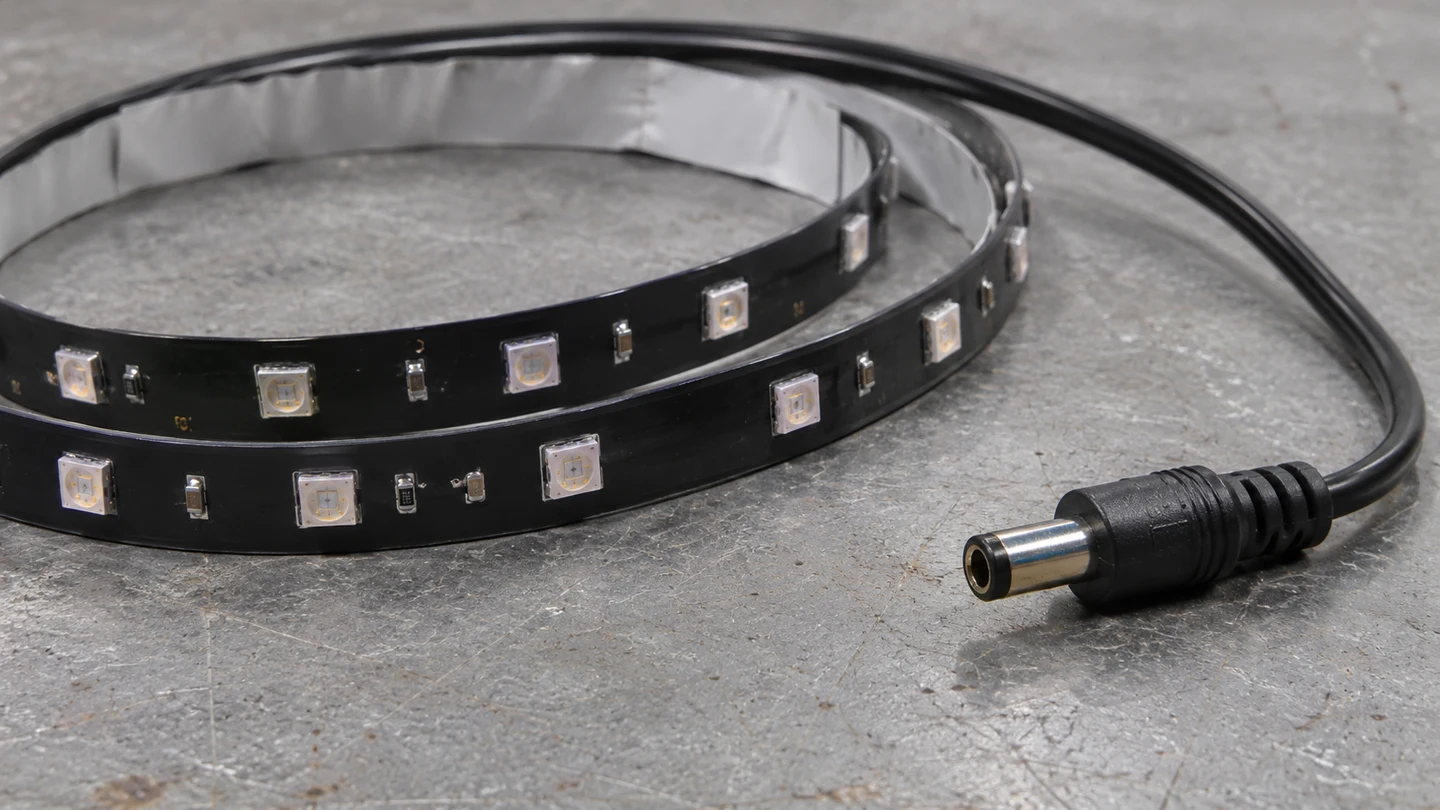
Start with the model label and the manufacturer’s documentation. Find the stated wavelength or spectral output and look for a UV category and exposure warnings. A purple glow, a dark-looking emitter or the word “blacklight” does not tell you which wavelengths the product emits or how much UV reaches you.
Read the label before switching it on
Check the model number on the lamp or strip against the data sheet. Look for wavelength information and the instructions that apply to the complete assembly. If the seller lists only an input voltage, a color name or a photo of the light in use, leave it off until the manufacturer can identify its output.
Keep exposure controlled
The FDA describes skin risks from UVA and UVB and warns that direct UVC exposure can injure eyes and burn skin. Follow the manufacturer’s shielding and access instructions. Keep covers and interlocks in place. Never look directly into a UVC source or deliberately expose skin to it. If you cannot establish the output and intended protective setup, keep the product switched off.
If a strip is going outdoors, check its IP rating and installation requirements separately. An IP rating describes protection against dust and water ingress. Use the lamp documentation to establish UV exposure precautions.
Questions & discussion
Share a question or a useful experience about this guide. Comments appear immediately. Your name and comment are public. Email is optional and stays private; reply emails are not enabled yet. Comment privacy.