If the strip starts bright beside the cupboard and fades towards the far wall, sketch two lengths on paper. One is the cable from the driver to the strip. The other is the strip itself. A driver can have enough rated power while too little voltage reaches the last section.
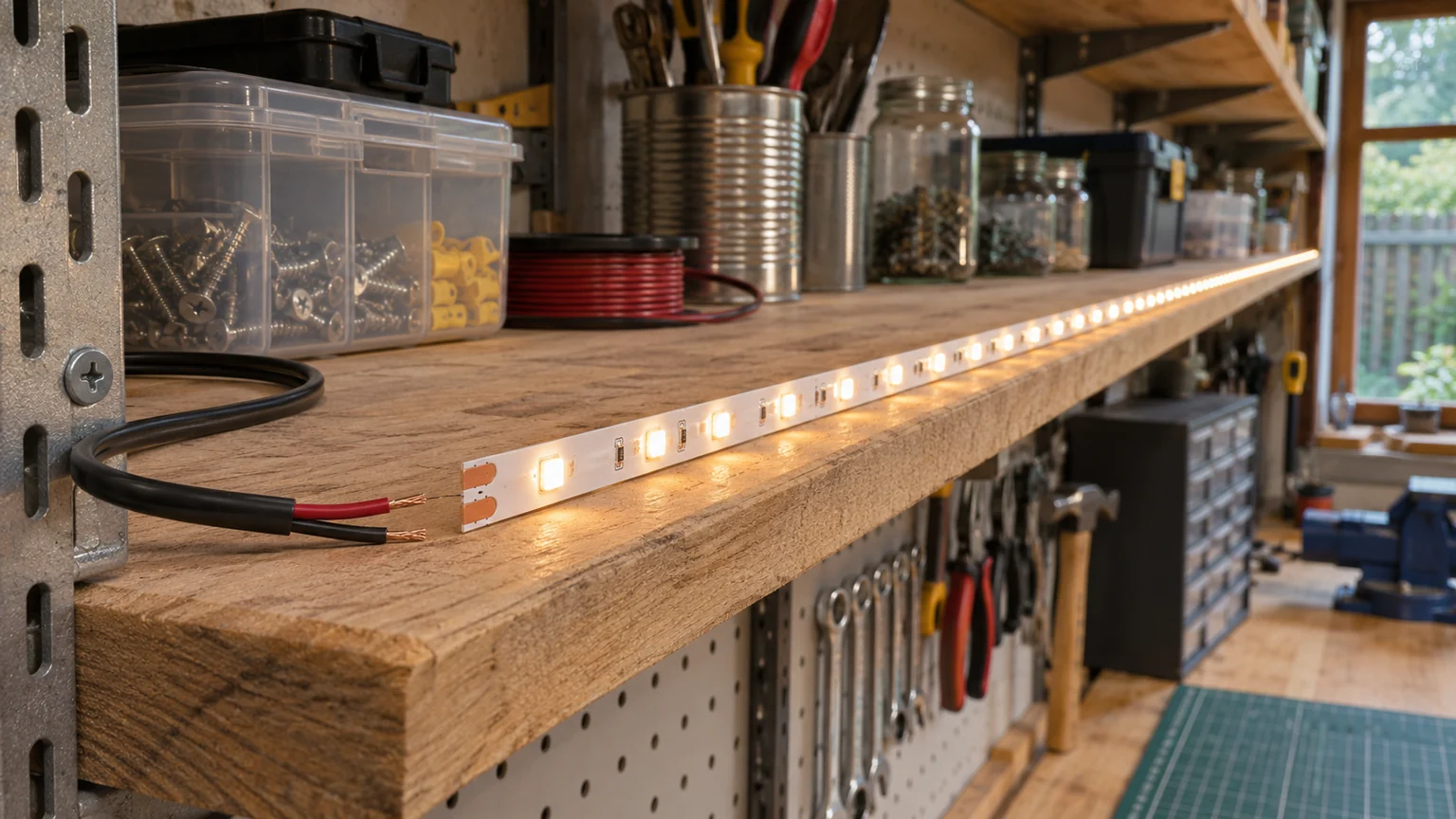
Estimate the cable loss before choosing a route
For a two-wire constant-voltage DC feed, the expected cable drop in volts is branch current in amperes multiplied by the round-trip conductor resistance in ohms. When the cable data gives resistance per metre for one conductor, multiply by the outward and return lengths. A chart labelled one-way distance has already accounted for the return in its design. Use its own distance convention.
Take the maximum simultaneous load on that branch from the equipment data. For a rated constant-voltage load, watts divided by rated volts gives a starting current estimate. Use the strip power tool if you need the load first. Compare the estimated voltage at the strip input with the product instructions. A wire chart for another voltage, insulation or load can give the wrong answer.
Divide the run where the light needs it
A long tape also loses voltage along its copper tracks. The first length carries current for the sections beyond it. Increasing the cable size can reduce loss before the strip while leaving the tape itself too long. Check the manufacturer’s maximum continuous run for that exact tape at its specified load.
Draw each permitted feed as a separate branch from the distribution point. Label branch length, current, polarity, connector rating and the driver or controller output serving it. For a long cabinet, two shorter approved branches can give the appearance of one continuous line. Follow the product wiring diagram for feed points and cuts. Never join outputs from separate power supplies unless the equipment is expressly designed for that arrangement.
Choose the conductor and check the fittings
A larger conductor cross-section reduces cable resistance for the same material and route. Use the maker’s chart for the run and also check current-carrying capacity, terminal size, protective devices and installation conditions. A large conductor forced into a small connector creates a different problem. A single dark section or hot joint calls for a connection check before changing the whole cable route.
Disconnect the supply before handling accessible plug-in parts. Stop using a system with scorching, damaged insulation or a hot connector. Have a qualified electrician handle fixed mains wiring, concealed cable routes and any protection or supply arrangement you cannot verify. The strip and driver guide covers component access and compatibility.
Questions & discussion
Share a question or a useful experience about this guide. Comments appear immediately. Your name and comment are public. Email is optional and stays private; reply emails are not enabled yet. Comment privacy.