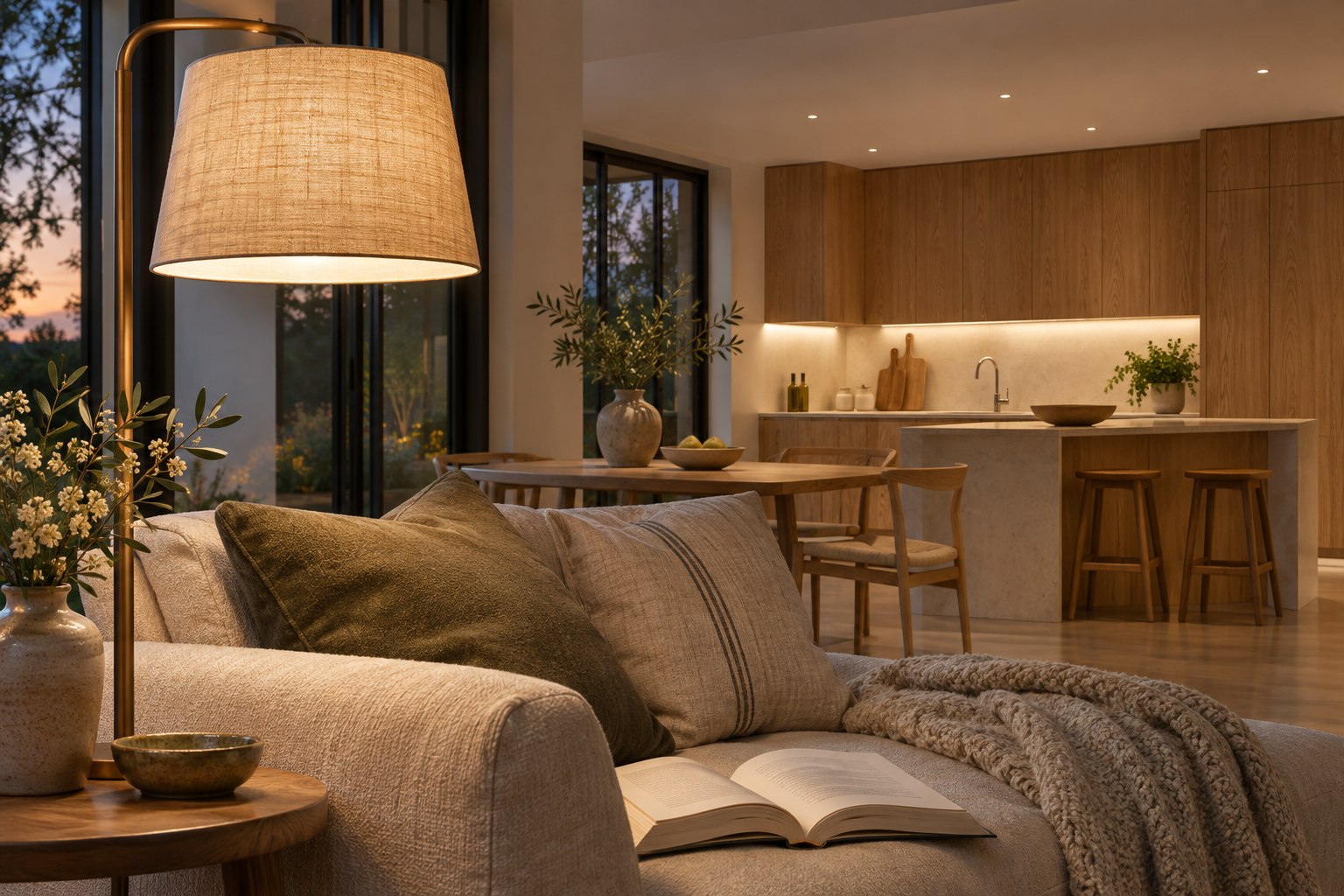
Pick one white for the lights you usually see together. Give a room its own color temperature when you prefer it that way with the door open as well as closed. I’d start the lighting plan at the sofa, where you can see the kitchen long after you’ve finished cooking.
Trace the view from your seat
Mark your usual seats on the floor plan. From each one, circle the lights you expect to leave on together. Treat the kitchen pendants, dining light and living-room ceiling lights as one choice if they share that view. Start with the same lamp specification for all three. Leave the guest bedroom out of that decision if you can close its door.
Try one exception before specifying it. Put your preferred warmer lamp at the bedside, leave the hall light on and look through the doorway after dark. Keep the bedroom choice if you like both the room and the transition. If every exception feels like a compromise, use the same white throughout and spend your planning time on switches and lamp positions.
Skip 3500K if the sample makes the living room feel more like a workspace than the place you want to unwind.
For background, use the color temperature guide. Narrow a warm-white shortlist with the 2700K and 3000K comparison, or use the whole-house 4000K guide for that specific choice.
Split the controls when the jobs happen separately
Picture someone reading on the sofa while someone else clears the kitchen. Switch the kitchen ceiling lights off in your plan. Can the cook still see the sink? Can the reader keep a lamp on without lighting the whole ceiling? Give each person control of the light they need. Keep the two whites alike if you enjoy them together.
Try a warmer table lamp with the ceiling lights off for a quiet evening. Then switch the ceiling lights on and look at the wall where the two beams meet. If you dislike the patch of different color, use matching lamps or reserve the warmer lamp for evenings when the ceiling stays off. A plug-in lamp with its own switch already gives you that choice.
Write down what each wall control should operate before the walls close. Give that list to a qualified electrician for new wiring, hardwired dimmers, driver changes or work inside a fixture or switch box. Describe the combinations you want from the doorway and the sofa. Let the electrician determine the wiring and confirm the fixture and control work together.
Check how colors look before fine-tuning the white
If the choice comes down to 300K, shortlist lamps rated CRI 90+ and ask for the R9 score. CRI gives you an average across eight test colors. R9 scores a saturated red separately. An extra 300K changes the shade of white but tells you nothing about either score. Put a ripe tomato and a cabinet sample under each lamp at a similar brightness. If both whites feel comfortable, choose the lamp that makes the food and finish look right to you.
Test the uncertain room before buying adjustable lights for the house
I’d test the decision that’s hardest to undo first. Borrow or buy one sample and put it beside a piece of the actual flooring or cabinet finish. Read a page at the chair, then look back at the kitchen. Repeat after sunset. If the page is hard to read, move the reading light closer or try more light on the page before changing its color.
- If you want to choose once, try a fixture with selectable white settings. Check how its selector is accessed after installation. Ask the electrician to demonstrate the choices if accessing it requires opening the fixture.
- If you want the room warmer as you turn it down, try a dim-to-warm lamp. Check the actual lamp and compatible dimmer at your evening setting, with your book open. Keep a separately controlled reading light if that setting feels right for the room but leaves the page too dark.
- If you want warm light at two different brightness levels, try tunable white with independent brightness and color controls. Save a reading setting and an evening setting. Have someone else recall both using the control that will actually be in the room.
Choose the ceiling fixture before the drywall goes up
Ask the electrician to show you an ultra-thin integrated downlight and a deep recessed housing with a replaceable bulb. Try the thin unit where ceiling space is tight. Check where its driver will sit and ask which parts you can replace if the light fails. With the deep housing, check clearance before framing is finished, then sit in your usual chair and see whether the trim hides the bright bulb from view. If you want to change the white later by swapping a bulb, confirm the housing takes a bulb you can buy separately.
Try the daytime setting with the blinds open
Start with the electric lights off on a bright day. From the sofa, look at the wall beside the window and then at the kitchen counter farther inside. Switch on just the counter light. If the two areas look awkward together, try a cooler setting there and compare it with your usual white. Keep the fixed setting if it already looks good in daylight. After dark, close the blinds and try a warmer setting with the reading lamp on. Save separate day and evening settings only if you would actually use both.
On the order sheet, record the approved sample for the connected spaces, each room that gets an exception, and which lights must work independently. If one bedroom is still undecided, keep the adjustable option there. Order the fixed lamps you already liked for the rest of the house.
Questions & discussion
Share a question or a useful experience about this guide. Comments appear immediately. Your name and comment are public. Email is optional and stays private; reply emails are not enabled yet. Comment privacy.